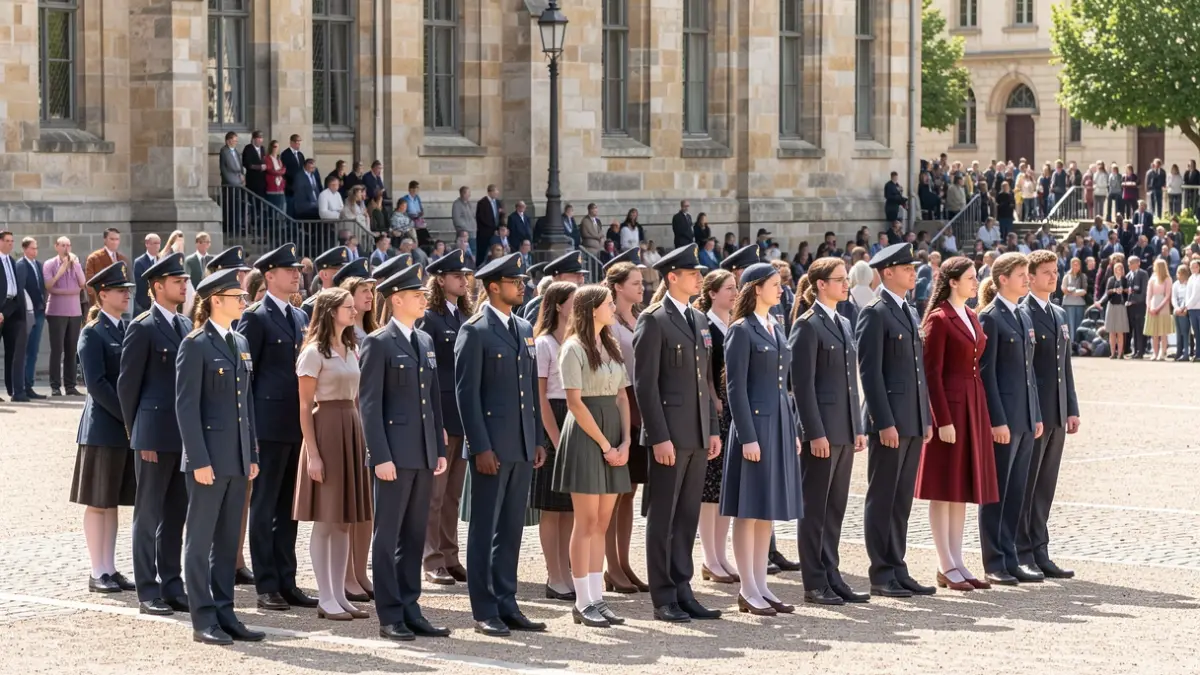
The minister met with young people engaged in the National Universal Service (SNU), expressing her satisfaction with their personal growth and commitment. "I met girls and boys who are comfortable with themselves, happy with their commitment," she summarized after visiting various workshops and living areas of these new volunteers. She noted the diverse training backgrounds represented, from butchery to accounting, including high school graduates and many with post-baccalaureate studies, all emphasizing the quality of training and the support from their supervisors.
Among the volunteers, Lili, 21, with a Bachelor's degree in graphic design, finds the experience appealing and plans to sign a contract after discovering the military environment. Come, 21, holding a BTS in SME Management, is tempted by the infantry. Damien, 23, a former employee, feels that regimental life doesn't align well with his relationship but plans to join the reserve.
For many, this national service is a pause in their journey, but they find it to be more than just a temporary break. "They all say they are doing things that interest them," emphasized Catherine Vautrin. After initial training, the engaged individuals participate in active missions, ranging from intelligence gathering to bakery services, with some deployed for Operation Sentinel.
Lorine, 19, aims to pass the health competition to become a nurse. Perrine, with a BUT in packaging, discovered the regiment's innovation department, which designs helmet camouflage from used uniforms. Her training has been useful, and she is seriously considering enlisting, even presenting the minister with a white bison, the regiment's symbol, made with a 3D printer.
The 126th regiment, described as "one of the jewels of the army," is hosting about fifty SNU volunteers, an increased number due to demand. These young people, aged 18 to 25, will serve for 10 months. They acknowledge that the beginnings were challenging (early wake-ups, community service, shared dormitories, no mobile phones), but ultimately beneficial.
Currently, 3,000 young people, 25% of whom are women, are participating in the program. The government aims to reach 10,000 conscripts by 2030. The minister stressed that these individuals have developed a "military culture" and are "essential actors" in rebuilding the link between the armed forces and the nation, a connection that has weakened since conscription ended a quarter-century ago.