
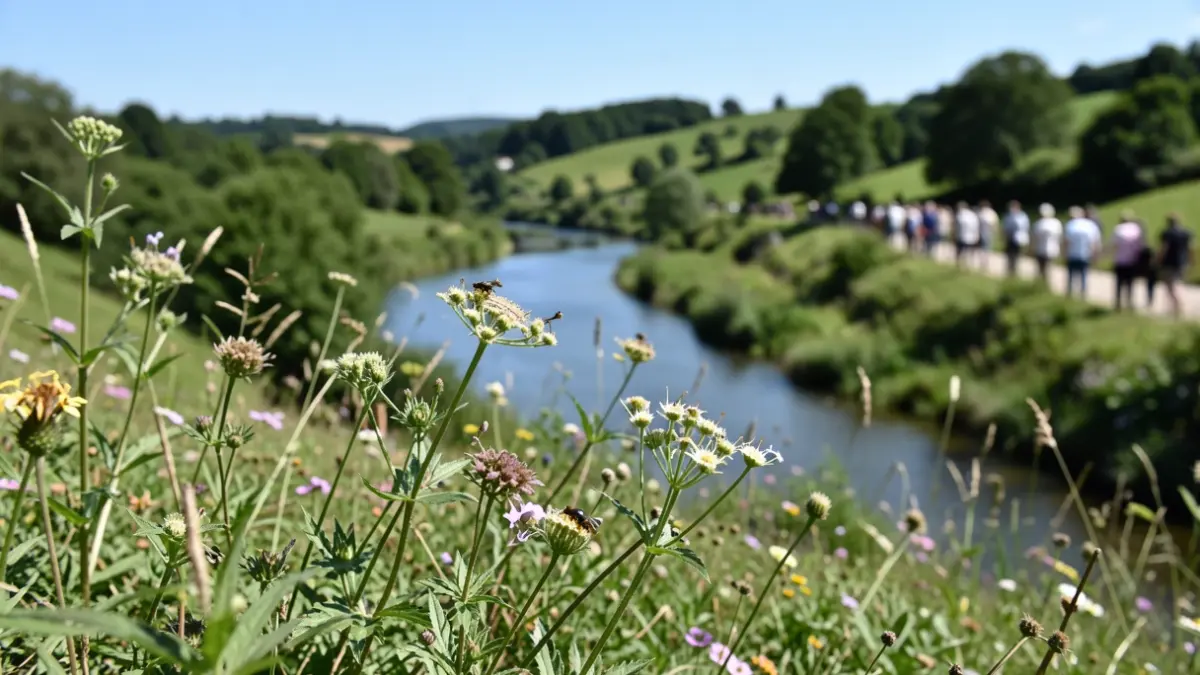
The objective of this atlas was to establish a baseline of the biodiversity present in the Grand Périgueux territory, building upon existing knowledge and conducting new naturalistic inventories. This data aims to guide future actions for better local biodiversity protection.
From January 2023 to January 2025, experts, alongside volunteer residents, carried out scientific inventories. These investigations employed various methods, including cartographic analyses, video traps, and observation points. Partners such as Vya Natura, the Conservatoire d’Espaces Naturels de Nouvelle-Aquitaine, the Cistude Nature association, the Société Mycologique et Botanique du Périgord, the Conservatoire Botanique National Sud-Atlantique, and the Fédération Départementale de Pêche de la Dordogne contributed to this project.
The collected data, accessible on the Grand Périgueux website, covers different habitat types, flora, fungi, non-flying mammals, fish, amphibians, reptiles, and odonates (dragonflies and damselflies). It complements existing information on beetles, grasshoppers, butterflies, and birds.
This data will feed into national public databases and will be used to develop proposals for biodiversity action plans. The inventory has identified key environmental sites within the territory, which will be considered in the development of the new intercommunal Local Urban Plan (PLUi).
The project also involved the general public through numerous outreach activities. Educational kits were created for leisure centers and schools, covering topics such as nocturnal life, soil fauna, and green and blue ecological corridors. Citizen science sessions, public events (wetland walks, owl listening evenings), and educational work with 13 classes from CP to CM2 were organized between 2024 and the end of 2025.