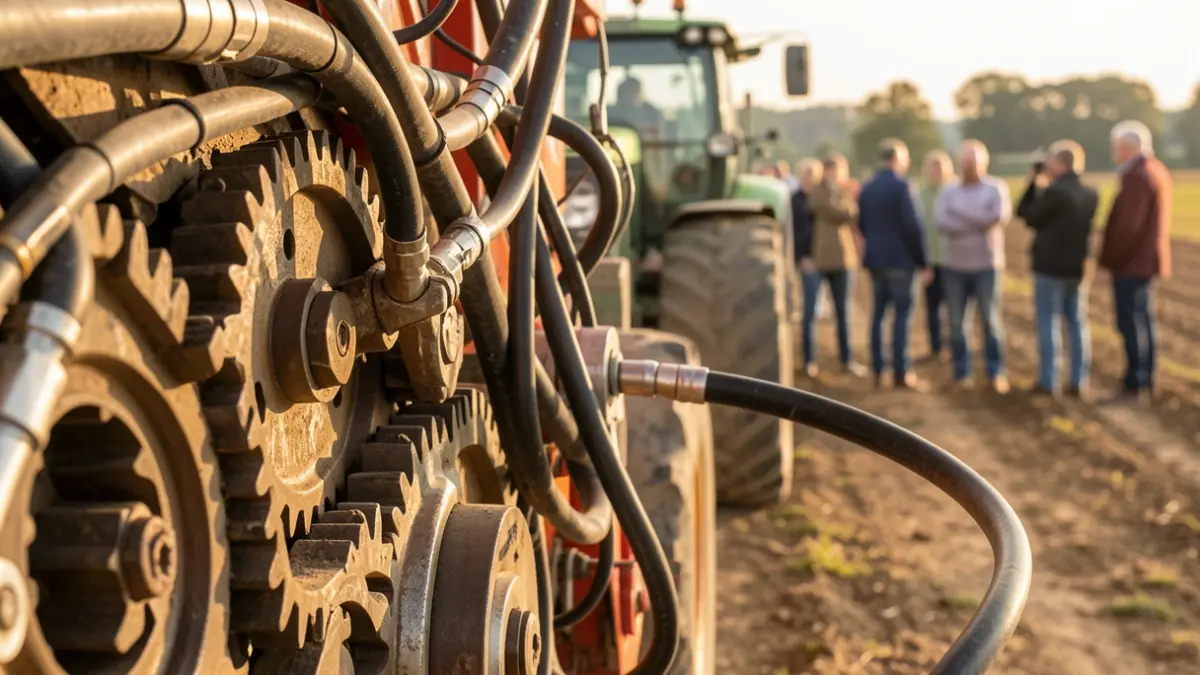
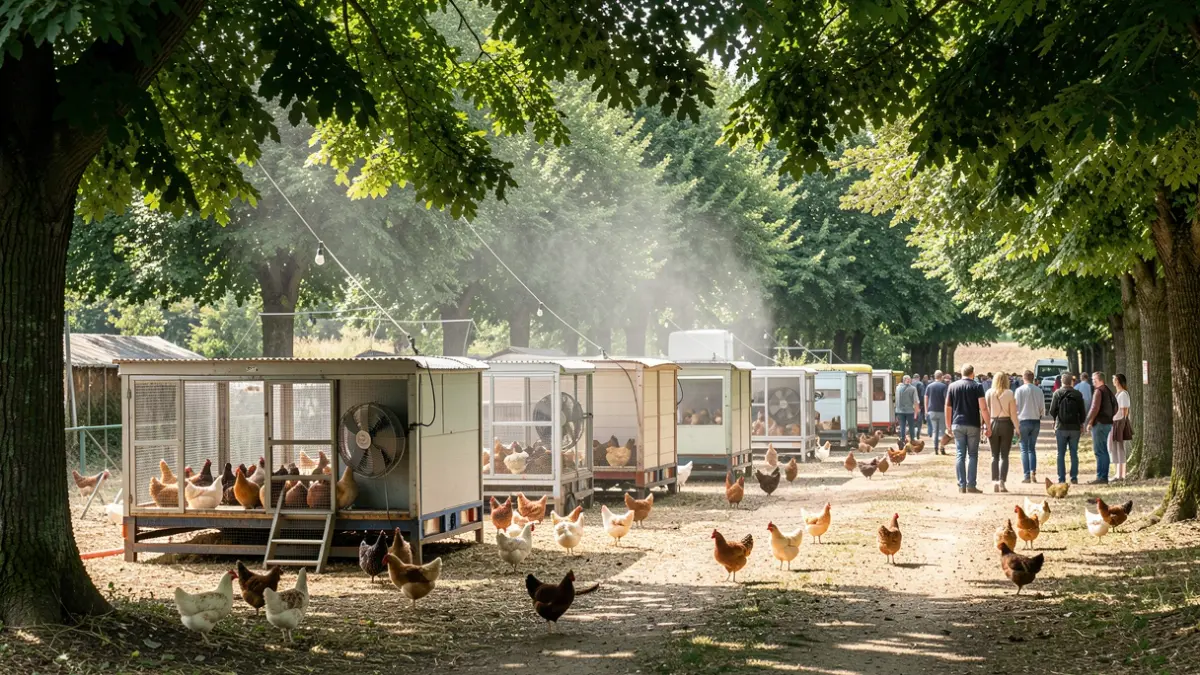
The summer of 2026 severely tested poultry farming in the Landes region. Matthieu Labarthe, a farmer in Bégaar, shared the consequences of multiple heatwaves and drought on his farm, which specializes in Landes chicken under SIQO, Label Rouge, and IGP Landes certifications.
Temperatures exceeding 40°C, observed since 2022, have necessitated constant adaptation. Although mortality rates were limited due to measures like mobile huts, shaded pastures, fans, and misting systems, the heat caused a loss of appetite in the animals. This resulted in smaller birds that could not be classified as Label Rouge, representing a significant financial loss for farmers.
The drought also affected the yields of cereals, such as corn, used to feed the livestock. On non-irrigated land, harvests were reduced by four to five times, raising concerns about future supply and the need to purchase or import these feedstuffs.
In response to these extreme conditions, farmers have intensified their efforts by planting more trees for shade and implementing cooling systems. Despite the feeling of having worked much harder for less return, the satisfaction of saving the animals remains. However, there is palpable concern for the future of the sector, as the limits of adaptation appear to have been reached.
Regarding public aid, Matthieu Labarthe expressed doubts about its effectiveness. While the profession is included in allocation discussions, he believes the announced amounts, one billion euros for all of France, are insufficient given the losses suffered, which exceed this figure in the Landes department alone.