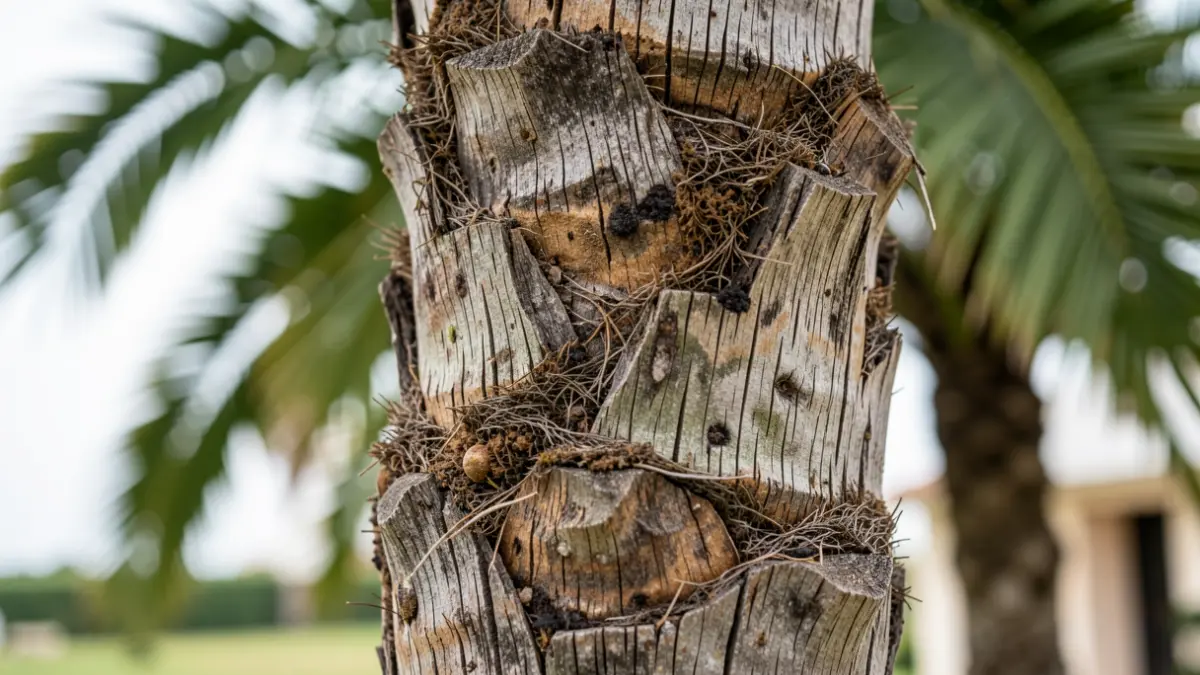
Despite treatments implemented since 2024 to limit the spread of the red palm weevil and preserve the community's plant heritage, some trees now show advanced decay and cannot be saved. The removal of 8 palms near the war memorial has become necessary to ensure pedestrian safety. Municipal services have noted significant degradation despite interventions, making their maintenance unsafe.
The felling will be carried out by municipal services and will begin on October 19. Concurrently, a redesign of the green space is under consideration, with works scheduled after the November 11 commemorative ceremony.
The fight against the red palm weevil and the palm borer involves two municipal agents for ten days every four to six weeks, from March-April to October-November. These interventions include applying nematodes and setting up pheromone traps. Despite these regular efforts, some palms could not be saved, demonstrating the City's commitment to preserving its tree heritage.
The red palm weevil is a beetle measuring 20 to 40 millimeters, active from February to November, with females capable of laying up to 300 eggs. Initial signs of infestation include the drooping of central fronds, leading to a change in the palm's silhouette, and eventually the collapse of the crown, causing the tree's demise.