The exercise's name, ÉGLETONS 44, pays homage to the Resistance battles that took place in the region in 1944. Colonel Antoine Naulet highlights the strong symbolic continuity with this tribute to the Corrèze region's resistance fighters.
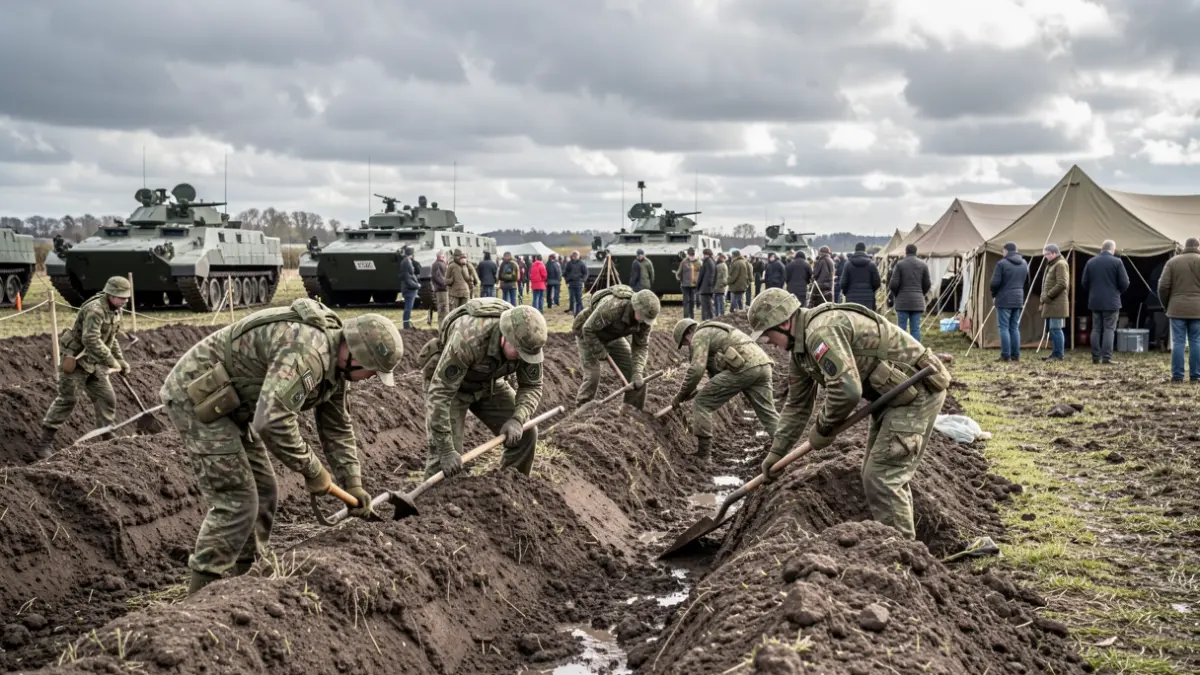
However, the exercise is resolutely focused on current conflicts. The first phase, described as 'high intensity', saw 550 soldiers engage in simulated underground combat. For five days, they dug kilometers of trenches, some reaching 1.50 meters deep, all while under constant threat from enemy drones and snipers.
Day and night pressure was maintained to push soldiers to their limits, both literally and figuratively. At the end of the five days, fatigue was an integral part of the exercise. The men then moved to a regeneration area for six to twelve hours, where they were no longer threatened by the enemy, allowing them to shower, eat, and sleep before redeploying.
Since Tuesday evening, the scenario has shifted to urban combat, another major component of this rigorous training. This sequence continued on Wednesday in Brive, where soldiers, vehicles, and armored personnel carriers occupied several sectors of the city. Unlike a military base, a city does not adapt to soldiers; it is the soldiers who must adapt to it.
Colonel Naulet emphasizes the importance of these details: 'All these small details, in war, count a lot.' The army has a wide range of training methods, from computer simulation to live firing. Between these, field training offers an irreplaceable dimension: the unpredictability of reality.
While acknowledging the constraints for residents, the commanding officer states that the stakes far exceed these few days of exercise: 'It saves lives. The mistakes we make in training, we won't repeat in combat.' The objective of ÉGLETONS 44 is to make the training realistic enough so that when it's no longer an exercise, the soldiers, nicknamed the 'Bisons', have already learned to cope with the unexpected.