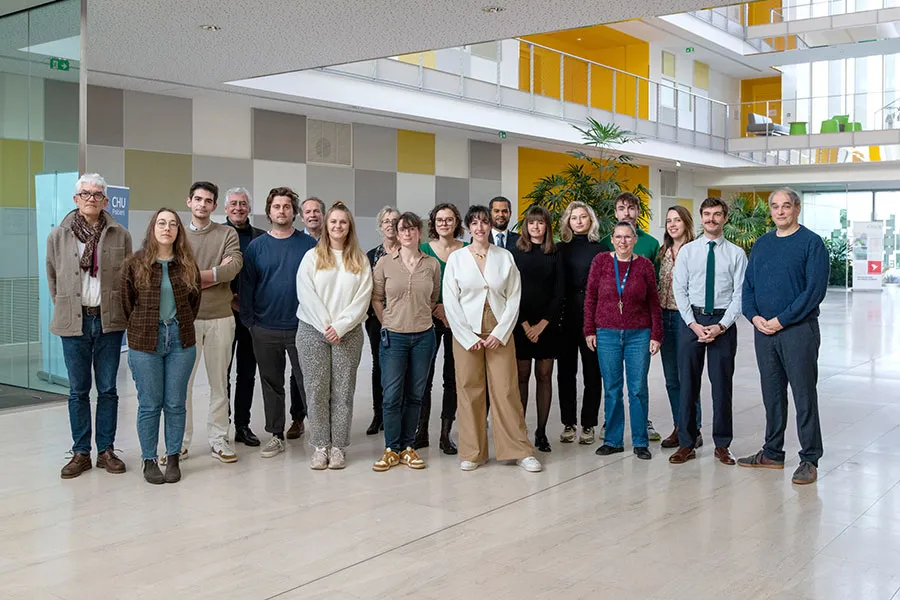

The Bettencourt Schueller Foundation revealed the 2026 winners of its prizes and support programmes for life sciences researchers. The ceremony took place on 25 November, chaired by Françoise Bettencourt Meyers, president of the Foundation, and Hugues de Thé, president of the Scientific Council. Among the seven laureates is Lisa Roux, research director at the CNRS and a member of the team at the IINS in Bordeaux.
The Impulscience programme, created in 2022, supports seven of the most promising life sciences researchers each year. Laureates are selected for their projects which received an excellent evaluation from the European Research Council, but were not funded due to budget constraints. Each scientist receives support of 2.3 million euros over five years to develop their work freely. Since its creation, the programme has already awarded 35 laureates.
“"One of the objectives of my team is to understand how oxygen influences these electrical oscillations of the hippocampus. We want to understand how neurons react to changes in oxygenation and how apnoeas can cause micro-arousals."
Lisa Roux's work focuses on slow-wave sleep, a phase essential for memory consolidation. During this period, the brain produces electrical oscillations, including ripples, generated in the hippocampus, a key region for memory. The team aims to combine several techniques to simultaneously observe the activity of dozens of neurons, respiratory flows and oxygen level variations. These studies aim to understand how breathing influences memory and could, in the long term, help prevent certain cognitive disorders related to respiratory disorders.