Agroforestry, which involves integrating trees into crops, is often presented as a solution to mitigate heat peaks. For the first time, researchers from INRAE conducted micro-meteorological simulations on different agroforestry systems in temperate zones to analyze the climatic effects of large-scale agroforestry deployment. Published in Agricultural and Forest Meteorology, these simulations show that during sunny midday periods, the introduction of trees can lead to warming of the lower atmosphere due to higher solar radiation absorption by the surface, despite an average attenuation of the underlying crop's surface temperature.
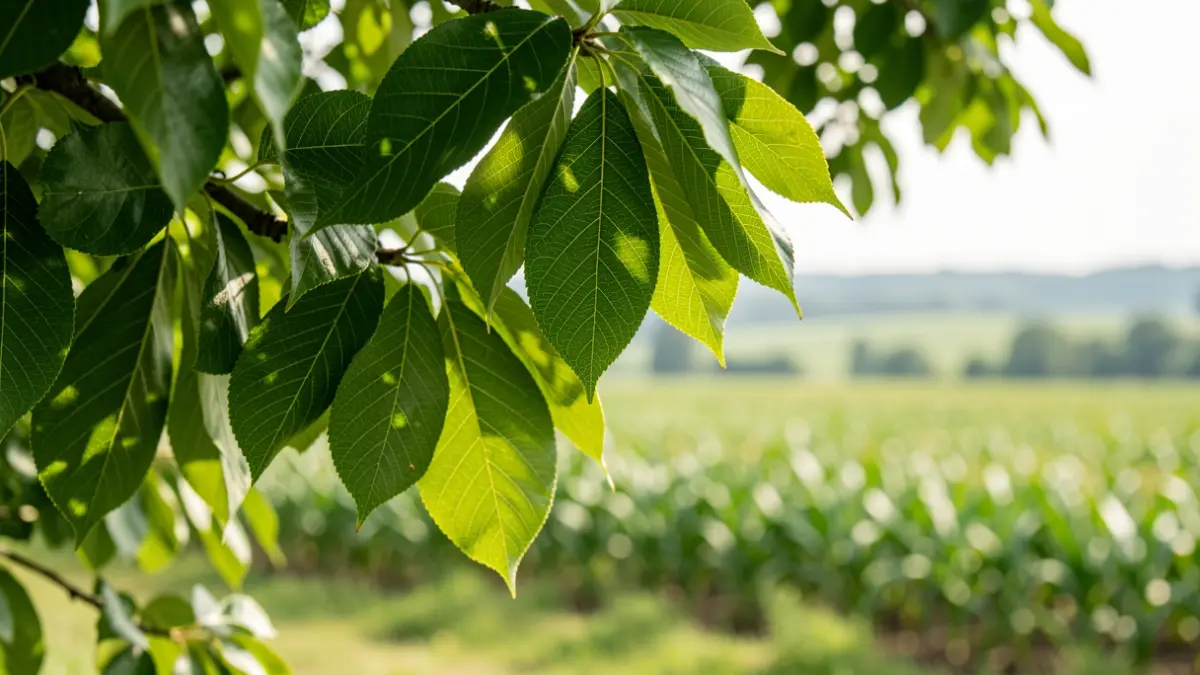
Agroforestry can take various forms: scattered trees within crops, rows of trees within them to allow machinery passage, or surrounding hedges. The state encourages hedge replanting for biodiversity. Among its benefits, agroforestry is often cited for limiting the effects of high temperatures through shade and evaporative cooling. In the longer term, it contributes to carbon storage, reducing atmospheric CO₂.
The introduction of trees modifies heat and moisture exchanges, as well as air movements between the surface and the atmosphere, creating microclimatic variability. When deployed over vast territories, it can also influence regional climate (macroclimate). While microclimate effects are well-documented, macroclimate impact remains little studied. Simulations covered several square kilometers for a sunny day, analyzing different tree distributions and soil water content.
The simulations confirmed local attenuation of air and crop surface temperature compared to the macroclimatic temperature. However, they also showed an increase in macroclimatic temperature, leading to air warming at the crop level compared to a crop without trees. This warming results from higher solar radiation absorption by agroforestry systems, due to darker foliage color and increased radiation trapping within the canopy's three-dimensional structure. Part of this excess absorbed radiation is converted into sensible heat.
Under dry soil conditions, air cooling in agroforestry systems only appeared with high tree cover, where the higher transpiration rate maintained by trees compensated for additional radiative absorption. Agroforestry does, on average, limit crop surface temperature through shading. However, sunny areas near trees can reach higher surface temperatures due to reflected and thermal radiation from the trees, which can be beneficial in spring but detrimental during heatwaves.
These simulations do not question the value of agroforestry, which extends beyond its climatic impact. However, they temper the often-presumed effect of climate change mitigation by agroforestry. Future research will study the climatic impact of large-scale agroforestry deployment over longer periods, including effects on clouds and precipitation.