
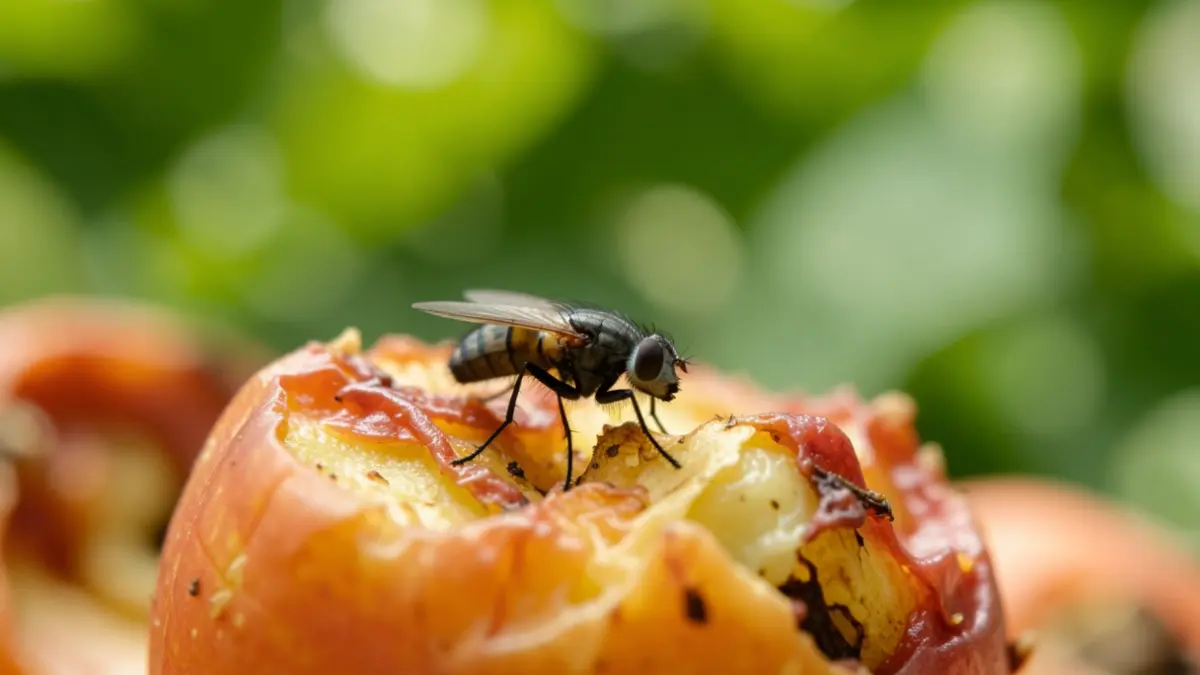
Fruit flies, small insects often found near common food sources like decaying fruit, exhibit surprising activity patterns when living in communities. While the studied species are naturally crepuscular (active at dawn and dusk) when isolated, their rhythms rapidly reorganize in the presence of others.
A study published in Nature Ecology & Evolution by researchers from INRAE, the Paris-Saclay Institute of Neuroscience (NeuroPSI), and Paris-Saclay University, reveals that these social interactions lead to a divergence in activity periods. Some species become nocturnal, while others shift their activity towards daytime, with the extent of this change varying by species.
The mode of communication used during courtship plays a key role in this temporal adaptation. Species relying primarily on chemical signals tend to become nocturnal, whereas those depending more on vision orient their activity towards the day. These sexual interactions thus help to separate the activity periods of different species.
Dopamine, a brain substance, coordinates these adaptations. In males, the presence of females of the same species modifies dopaminergic signaling, promoting arousal and sexual motivation, which shifts the timing of interactions. This plasticity in daily rhythms allows species to reduce the overlap in their lifestyles and optimize their coexistence within the same environment.