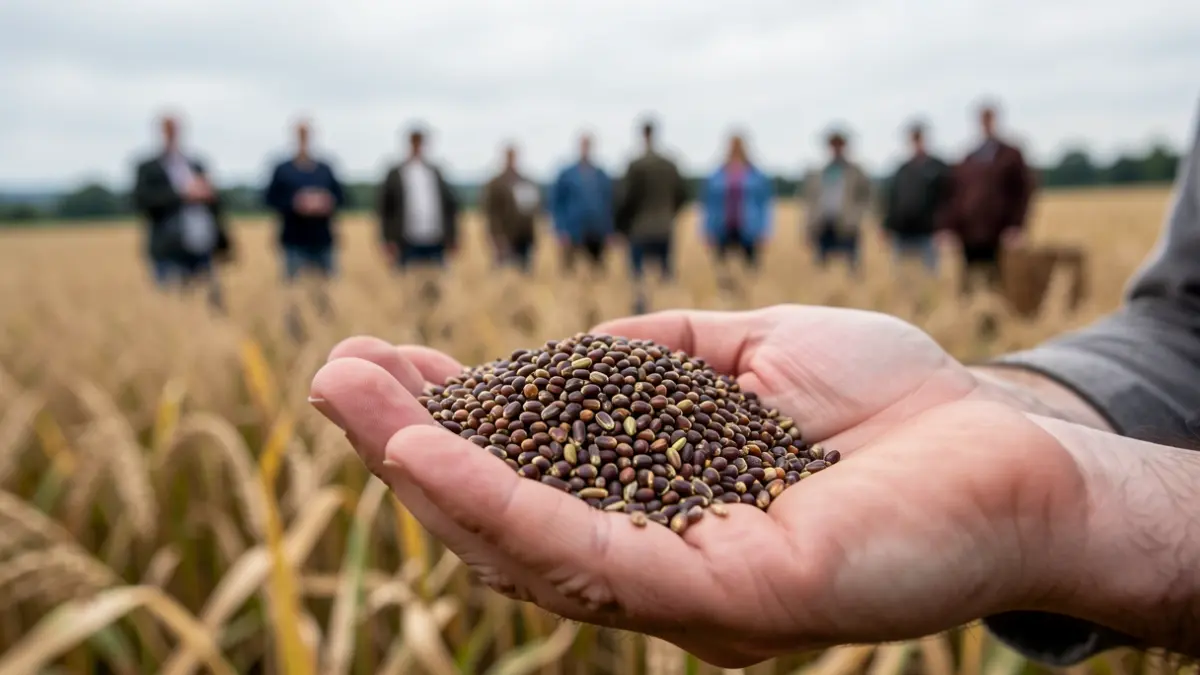
As corn harvests in the EU are estimated to be at their lowest this year, a study published in the journal Earth’s Future suggests rethinking the role of certain cereal crops. Sorghum, known for its resilience to high temperatures and water scarcity, is being studied for its potential in Europe, where its cultivation remains marginal (0.1% of agricultural land).
Scientists predict an increase in the average sorghum yield in Europe, rising from the current 3 t/ha to a range of 3.4 to 3.8 t/ha by 2050-2100, depending on climate scenarios. Areas with high and stable yields could expand from 22% to 29-34% of European cultivated land. This crop could replace nearly 90% of the corn currently used for European animal feed if cultivated once every three years.
To reach these conclusions, researchers developed a machine learning model based on historical yield data, coupled with climatic variables. The projections incorporate 20 climate change scenarios generated from 5 distinct climate models. The results confirm that sorghum is an interesting option for adapting European agriculture to climate change, particularly in France where water management is a significant challenge.
Water saved through sorghum cultivation could be reallocated to other crops, thus contributing to the territory's food self-sufficiency. This research paves the way for new agricultural adaptation strategies in the face of climate challenges.