
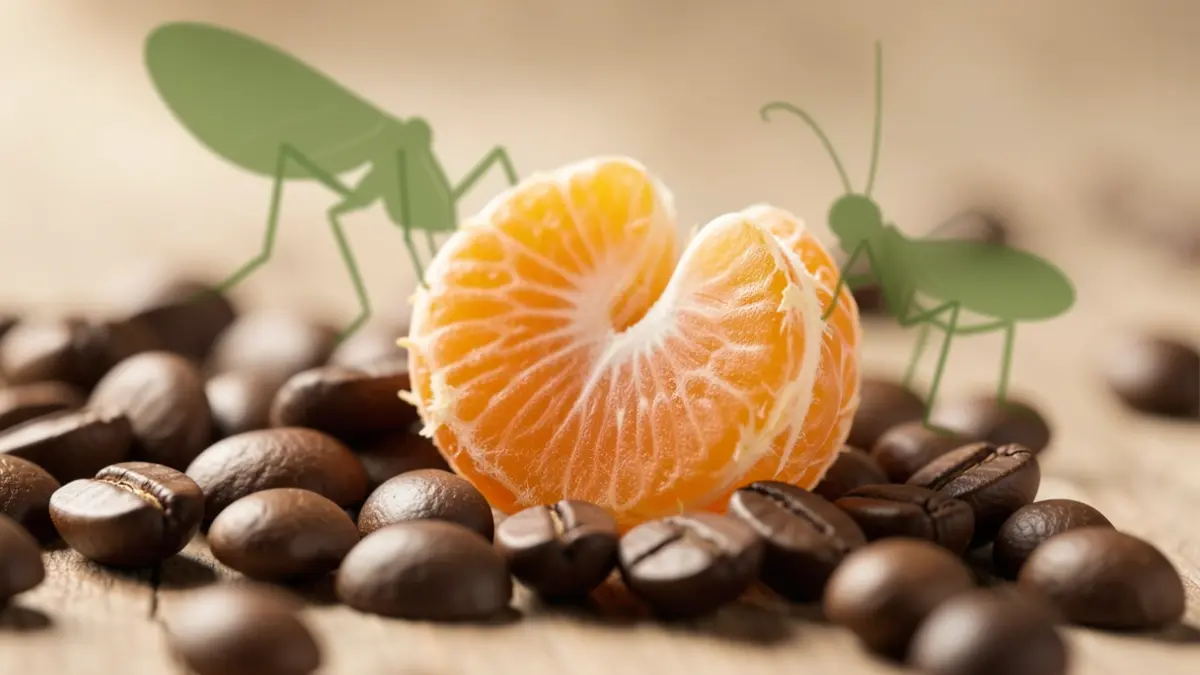
Aphids, which can transmit viruses to cultivated plants and threaten agricultural production, are still largely managed using conventional insecticides. Given concerns about human health and the environment, the search for natural alternatives is a priority. Plant extracts offer a promising avenue, but their effectiveness can be variable and sometimes insufficient. Combining multiple extracts could, however, boost their action through synergistic interactions between their compounds.
In the laboratory, scientists from INRAE and INSA Lyon evaluated the repellent activity of seven plant extracts against the pea aphid (Acyrthosiphon pisum). The essential oil from mandarin peel (Citrus reticulata) and the extract from coffee beans (Coffea arabica) showed interesting repellent activity. Their combination revealed a synergistic effect, proving more effective than using each extract separately.
To understand this effect better, researchers analyzed the chemical composition of the extracts. Two molecules, R-(+)-limonene (from mandarin) and hexadecanoic acid (from coffee), may contribute to this synergy. Their combination demonstrated a marked repellent effect, whereas these compounds tested individually showed no repellent activity. These findings, published in the Journal of Agriculture and Food Research, suggest a beneficial interaction between these molecules.
Further research is needed to confirm the value of this combination and to understand the interaction mechanisms, particularly the role of aphid perception of these compounds. This work could guide the development of new plant-based repellent strategies, thereby valorizing resources from the citrus and coffee sectors for crop protection.