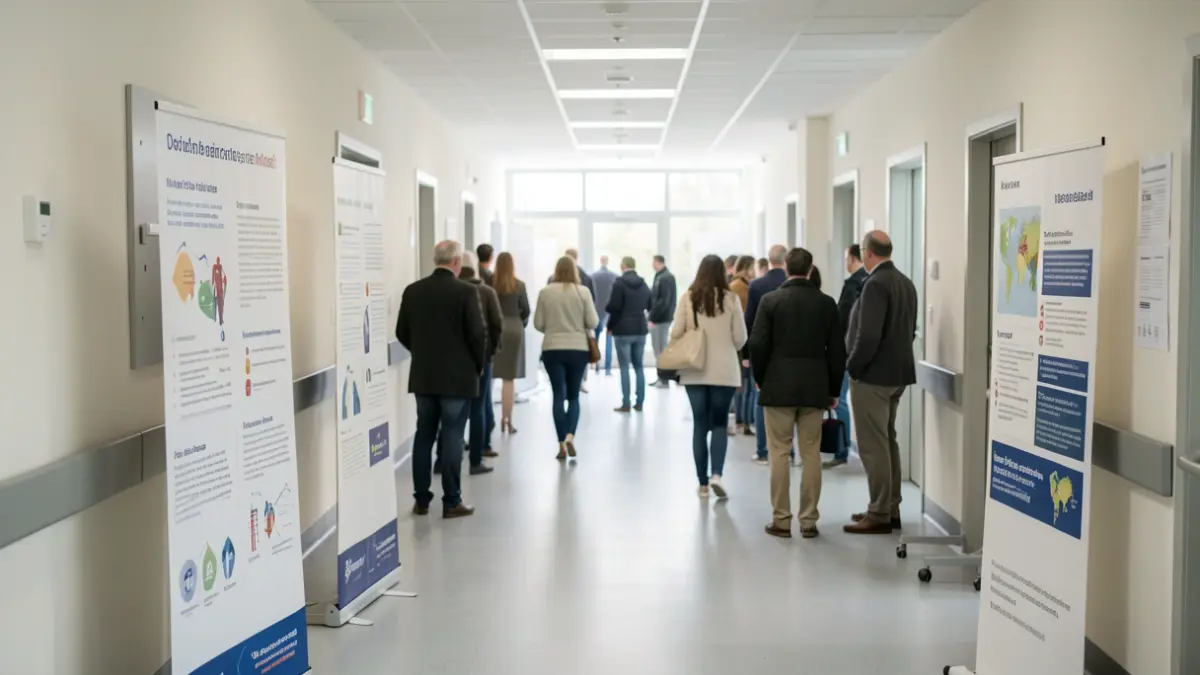
Haute-Vienne hosted the 2nd edition of the e-health evening organized by ESEA in Panazol, bringing together approximately 70 professionals from various sectors. The event, held on October 8th, aimed to address concrete issues related to digital health tools, such as secure messaging, Mon espace santé, and cybersecurity, for both professionals and patients.
During several round tables, experts and professionals shared their experiences, difficulties, and expectations regarding the security and fluidity of information exchange, with the goal of improving the quality of care. This meeting allowed for a confrontation of on-the-ground realities and the emergence of concrete improvement strategies, highlighting the growing reliance on reliable and adopted digital tools.
Secure health messaging (MSSanté) was a key topic, with discussions highlighting its progress and the need for continued support. Alexandre André, CIO in charge of digital transformation at the CHU de Limoges, noted the evolution since the first edition, moving from identified difficulties (multiple mailboxes, heterogeneous usage) to the presentation of concrete actions to improve these practices and the clarity of their organization. The CHU, with ESEA's support, has structured its mailbox management and MSS directory practices.
The practical utility of the Shared Medical Record (DMP) in crisis situations was illustrated by Marylise Vergnoux, Administrative Attaché at the General Directorate of the Intercommunal Hospital of Haut-Limousin. She recalled how populated patient records enabled teams to quickly access essential information during the summer's fires, emphasizing the time saved and increased safety provided by immediate access to medical history and treatments.
The evening also underscored the need to better connect all stakeholders in the care pathway, particularly those providing home care. Ghizlane Boukhari, Director of SAAD AD'VITAM, highlighted the strategic role of home care services in sharing information useful for care coordination. The widespread adoption of secure tools represents a significant lever for strengthening coordination with community-based professionals, healthcare facilities, and medico-social structures.
A common conviction emerged from the debates: securing digital exchanges is no longer just a technical issue. It now constitutes a concrete lever for improving coordination among professionals and, ultimately, the quality of patient care.