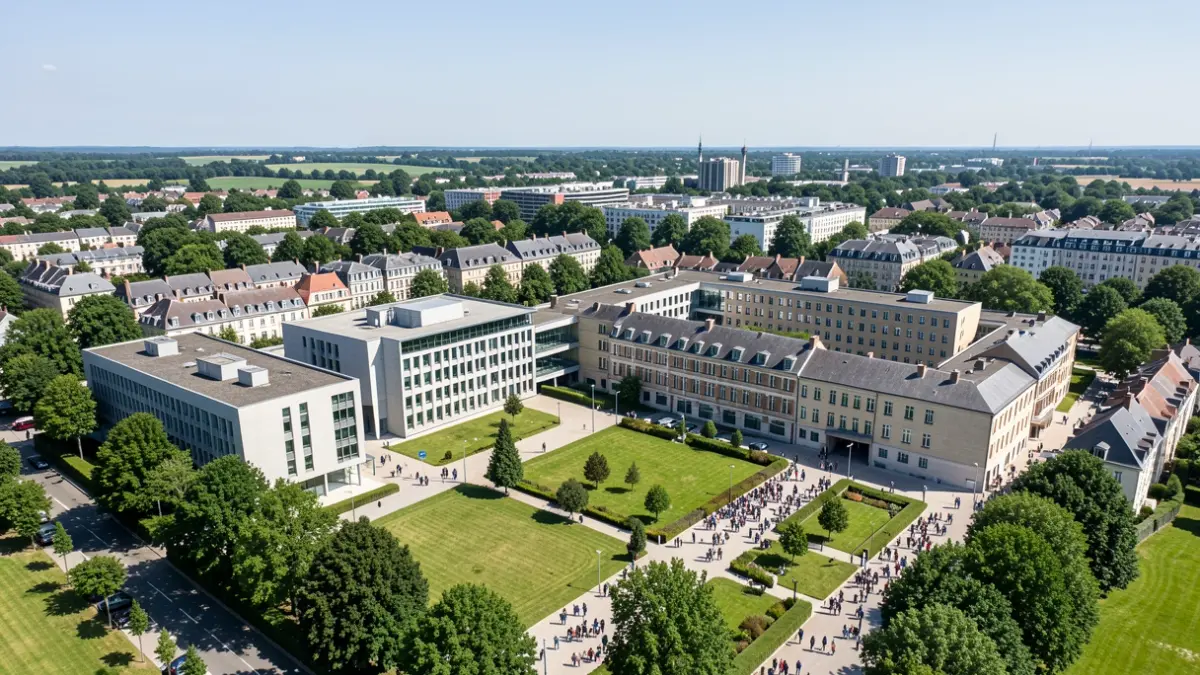
Daily commutes between home and place of study represent a significant portion of mobility related to the activities of the University of Limoges and its associated higher education and research institutions, such as 3IL Ingénieurs and ENSAD. As part of its ecological and societal transition policy, the university sought to analyze these practices to encourage more sustainable mobility, defined as a balance between accessibility, quality of life, and environmental protection.
This survey, the first of its scale reaching 18,330 students, collected responses from 2,512 students. The data gathered will be used for the university's 2025 Greenhouse Gas Emissions Report (BEGES) and for developing sustainable mobility scenarios in consultation with territorial partners.
The study's objectives included describing travel characteristics, identifying main transport modes used, understanding distances and travel times, gathering criteria influencing mobility choices, and collecting student expectations to support evolving practices.
Key findings indicate a strong receptiveness to transport alternatives: 65% of respondents would favor carpooling if a free system were available, 67% would favor public transport if it were free or offered more advantageous fares, and 57% would favor cycling or walking if secure infrastructure were provided.
The primary factors encouraging a change in travel mode are speed (53%), schedules (34%), and comfort (40%). These conclusions serve as a valuable decision-making tool for the University of Limoges in its pursuit of more sustainable student mobility adapted to local realities.