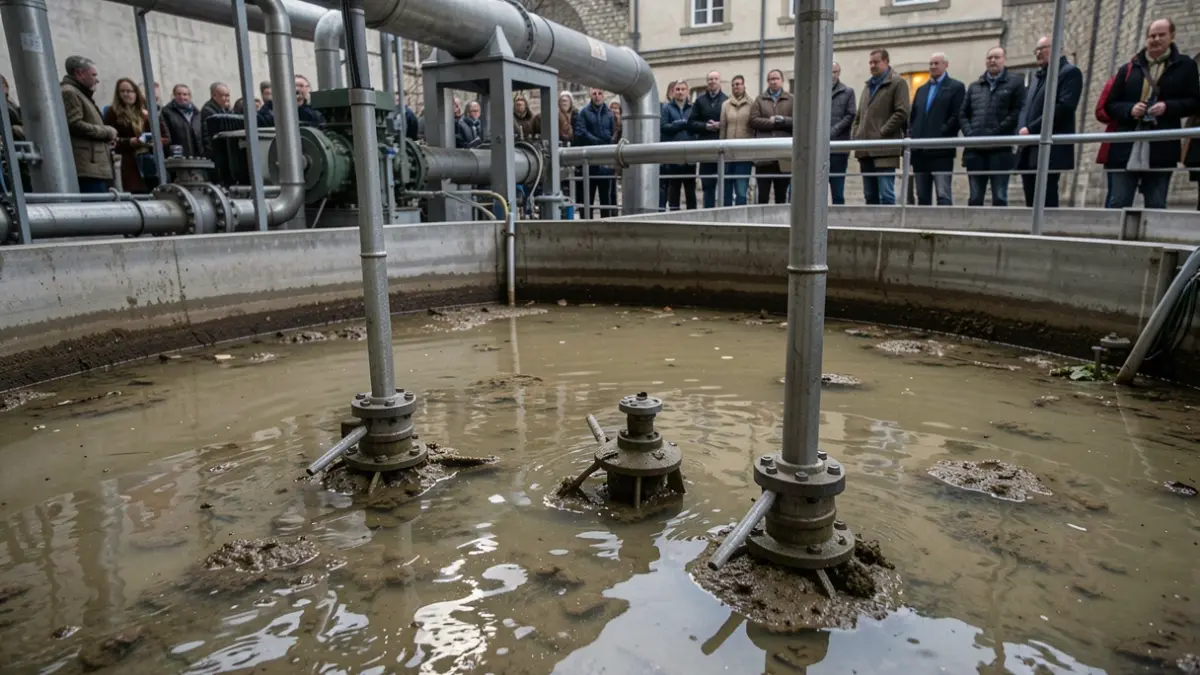
Wastewater treatment in Tarnos relies on the activated sludge process, where oxygen is injected into the aeration basin to allow bacteria to degrade pollution. This oxygen supply is provided by five ramps equipped with diffusers whose micro-perforated membranes wear out over time, reducing oxygenation efficiency. Their replacement was therefore necessary.
Unlike the 2015 operation which required the complete emptying of the basin, this time a direct intervention method was chosen. Although slightly more costly and time-consuming, it allows the facility to remain operational and prevents the discharge of untreated wastewater into the Adour river.
The project involved several stages: 3 to 4 weeks of desanding by specialized divers who suctioned 800 tons of sand, lifting of the ramps, replacement of worn membranes, followed by recommissioning and pressurized air tests. These operations were repeated for each of the five ramps.
Three companies were involved in this technical project: Sogea Sud-Ouest Hydraulique for coordination and technical expertise, Labat for sand transport and treatment, and Romoeuf for underwater interventions. The total cost of the operation was €400,000 excluding tax.
Upon completion of this work, the proper functioning of the aeration system, essential for effective wastewater treatment, is preserved, thereby limiting risks to the natural environment.