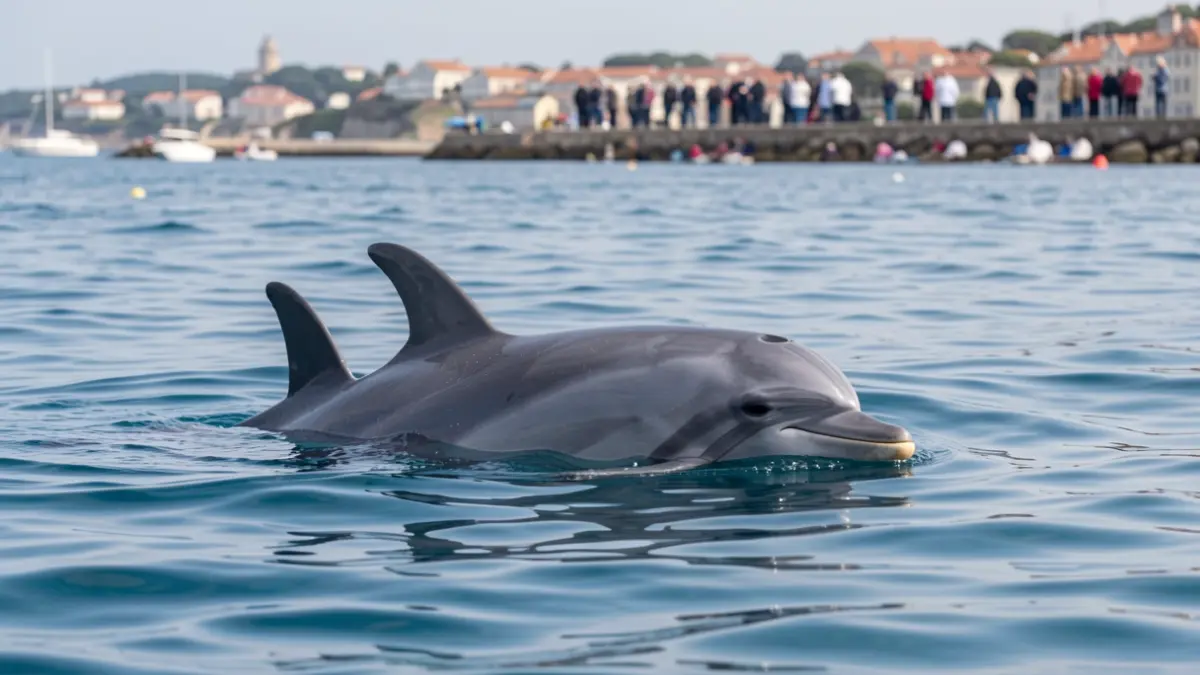
Following questions about the dolphin's health, the Saint-Jean-de-Luz town hall continues its monitoring of this animal in collaboration with the PELAGIS Observatory. The Observatory, which coordinates the National Stranding Network (RNE), has provided clarifications on the situation of the dolphin observed for almost a year in the bay.
An abscess had been identified on the animal's right flank. Observations made on November 16 indicate that this abscess has now "ruptured," which is considered a favorable development, allowing the accumulated infection to drain. Daily observations have not revealed any particular change in the animal's behavior that would suggest a weakening or deterioration of its health.
The situation is under daily surveillance by municipal agents and the authorized correspondent for the National Stranding Network. It is reminded that this bottlenose dolphin (Tursiops truncatus) is a protected species. No intervention on a wild animal of a protected species in its natural habitat can be undertaken without prior regulatory authorization. If a significant deterioration of its health were suspected, an exceptional request for a derogation could be made to the competent authorities to consider justified care.
To date, no observed element suggests a deterioration in its health. Daily monitoring therefore remains the preferred approach. The PELAGIS Observatory and the mobilized teams emphasize the importance of respecting the tranquility of this wild animal, urging the public not to approach or interact with it, allowing it to evolve freely in its environment without disturbance.