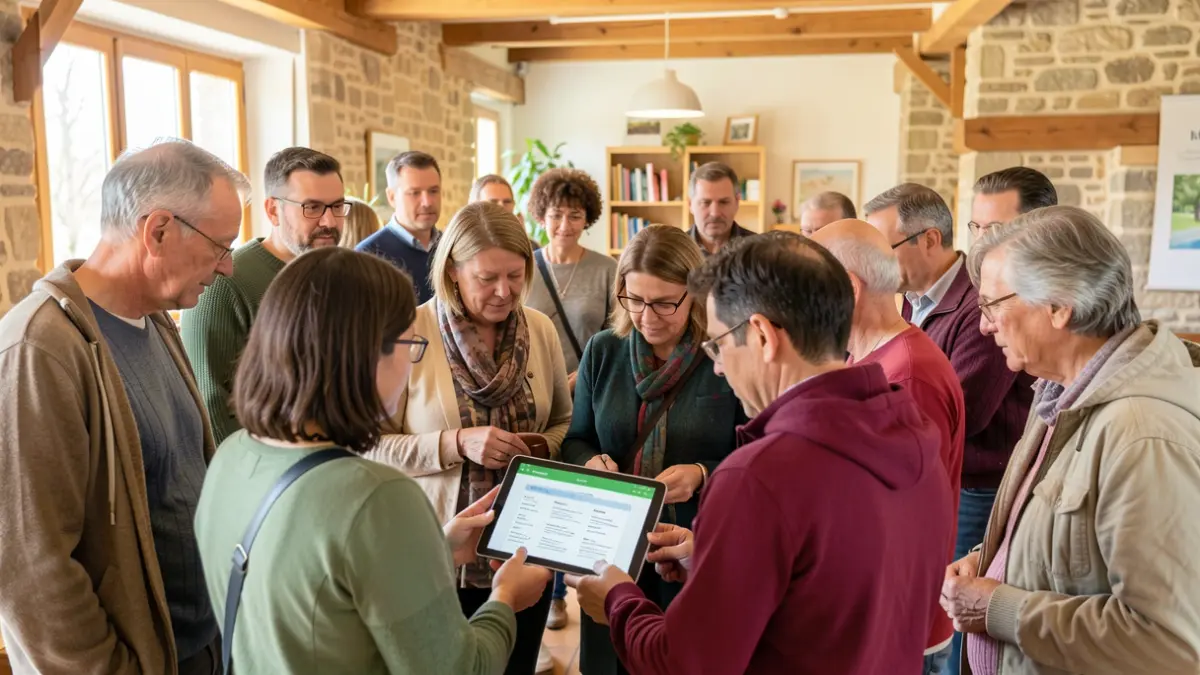

At the CHU de Poitiers, 19 patient partners actively collaborate with healthcare professionals to optimize the care and quality of services for other patients. These individuals, drawing on their experience with chronic illness, disability, or other health challenges, have formed a collective to raise awareness of their crucial role in patient therapeutic education (ETP) programs.
Emerging from the Kouchner laws of 2002 and the Hospital, Patients, Health, Territory law of 2009, patient partners fulfill multiple roles complementary to those of healthcare teams, focusing on training, communication, and support. Their personal experience and adapted training provide a human, lived dimension to care, contributing to the education of healthcare professionals, particularly nursing students, and to the development and facilitation of ETP programs.
Patient partners also act as liaisons between patients and institutions, helping to shift perceptions about the patient's role in the care pathway. They may participate in user committees, associations, or awareness events. Becoming a patient partner requires a recognized qualification in therapeutic education, often initiated by a doctor, association, or healthcare professional.
Several departments at the CHU de Poitiers, including cardiology, diabetology, and nephrology, have utilized patient partners for years and now consider them fully integrated. However, some departments remain hesitant, possibly due to a lack of awareness regarding the benefits patient partners can offer to both caregivers and patients.
The 'Vie la Santé' patient partner collective at the CHU was established two years ago with the aim of fostering mutual understanding and increasing visibility. Coordinated by Christelle Blusseau, a project manager in therapeutic education, this collective enables patients to connect beyond the specific ETP programs they are involved in. These meetings facilitate the discovery of challenges related to other pathologies and highlight the patient's value within the healthcare system.
The collective organized the first information day on patient partnership in June 2025 and held information stands in March 2026 across various hospital sites. Their goal is to demonstrate that patient partners are key players in the healthcare system, a culture they aim to instill in both patients and caregivers. They emphasize their role as a bridge, speaking the same language as patients and offering legitimacy through shared experience, thereby helping to restore hope and a zest for life.