
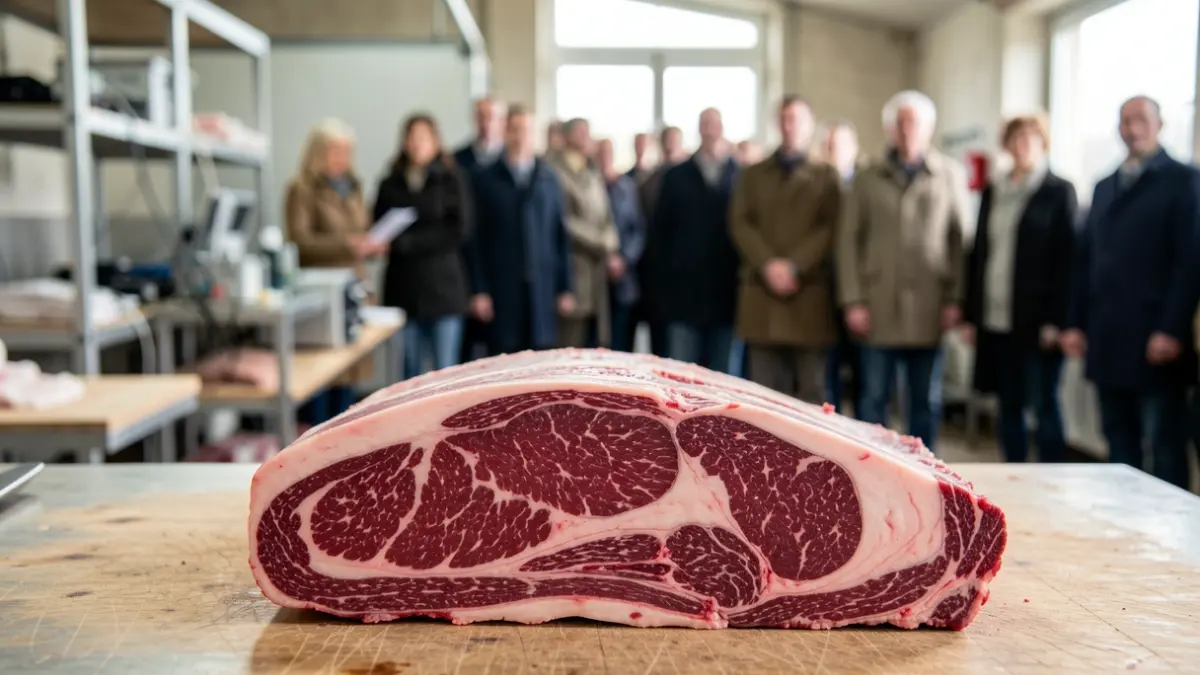
A scientific investigation compared the effects of diet and crossbreeding on beef quality. Thirty-six heifers were divided into three groups: Charolais×Salers finished indoors on a corn silage-based ration, Charolais×Salers finished on pasture, and Angus×Salers also finished on pasture. Researchers analyzed zootechnical performance, carcass characteristics, and the lipid content, fatty acid profile, color, and sensory properties of two muscles: Longissimus thoracis (sirloin) and Rectus abdominis (flank steak).
In Charolais×Salers heifers, pasture finishing resulted in leaner carcasses compared to indoor finishing. Intramuscular lipid content decreased by 36.6%, along with saturated and monounsaturated fatty acid levels. While the total amount of polyunsaturated fatty acids remained comparable, their composition changed significantly: omega-3s increased by 2.4 times, while omega-6s decreased by 31.8%. Alpha-linolenic acid, EPA, DPA, and DHA were all more abundant in the meat of pasture-fed animals, reducing the omega-6/omega-3 ratio by 3.2.
This improvement in lipid profile did not lead to a marked degradation of organoleptic qualities. For the sirloin, neither the finishing method nor the crossbreeding significantly altered the sensory descriptors evaluated. The flank steak proved more sensitive, being less juicy in Charolais×Salers heifers finished on pasture, highlighting the importance of not assessing sensory quality based on a single muscle.
The Angus×Salers crossbreeding, considered for its early maturity and fat-deposition aptitude, showed muscles that were 1.75 times fattier than those of Charolais×Salers on pasture, with a higher CLA content. However, zootechnical performance was not improved, with lower carcass weight and yield. The lipid profile also did not offer an overall advantage compared to pasture-finished Charolais×Salers, apart from the higher CLA content.
The study also tested two image analysis methods for estimating marbling from ribeye photographs, including the deep learning-based smartphone application meat@ppli. Both methods classified animals similarly to the reference chemical method for crossbreeding differences. However, they are not yet able to detect finer differences associated with diet. These results are nevertheless encouraging for the future development of rapid, non-destructive tools for use in slaughterhouses.
Ultimately, pasture finishing of Charolais×Salers heifers significantly enhances the meat's nutritional quality, particularly its fatty acid profile, while largely preserving its sensory qualities. These findings provide further support for valuing grass finishing in mid-mountain regions, where permanent pastures and local breeds are structuring resources for livestock systems.