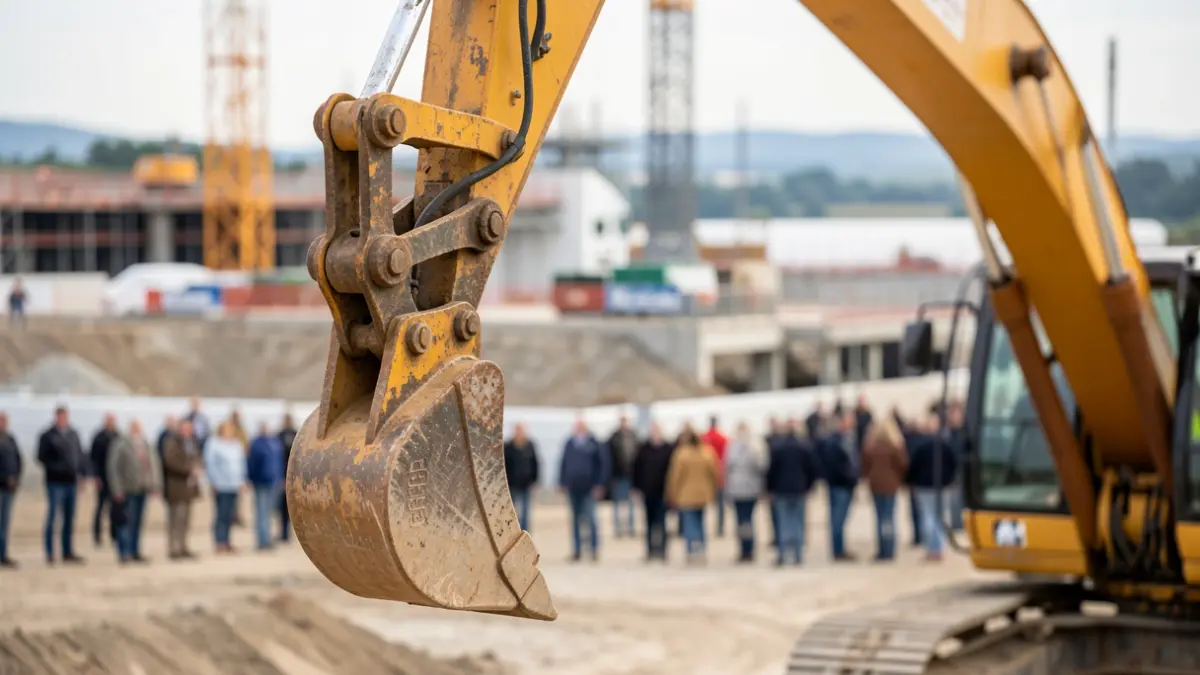
As part of its work and service contracts, SNCF Réseau includes social integration clauses. These require awarded companies to allocate a portion of working hours to individuals distant from employment, thereby supporting their sustainable return to work.
Currently, 289 individuals are benefiting from this program on the LNSO construction sites. Specifically, 150 people are engaged in the Railway Developments South of Bordeaux (AFSB), and 139 in the Railway Developments North of Toulouse (AFNT).
These integration pathways cater to diverse profiles. On the AFSB sites, 36% of beneficiaries are under 26 years old, while half are between 26 and 49 years old. For AFNT, 73% of beneficiaries fall within the 26 to 49 age bracket.
The majority possess a qualification level of CAP-BEP or lower: 84% on AFSB and 80% on AFNT. Among them, nearly one in two individuals has no formal qualifications.
Social integration opens doors to a wide array of professions, including general labor, equipment operator, network installer, railway operator, as well as roles in engineering, maintenance, administrative support, and site supervision.
Beyond the numbers, these journeys illustrate the commitment to making the LNSO construction sites a catalyst for professional integration and recruitment, offering everyone the chance to gain experience, develop skills, and build a lasting career project.