
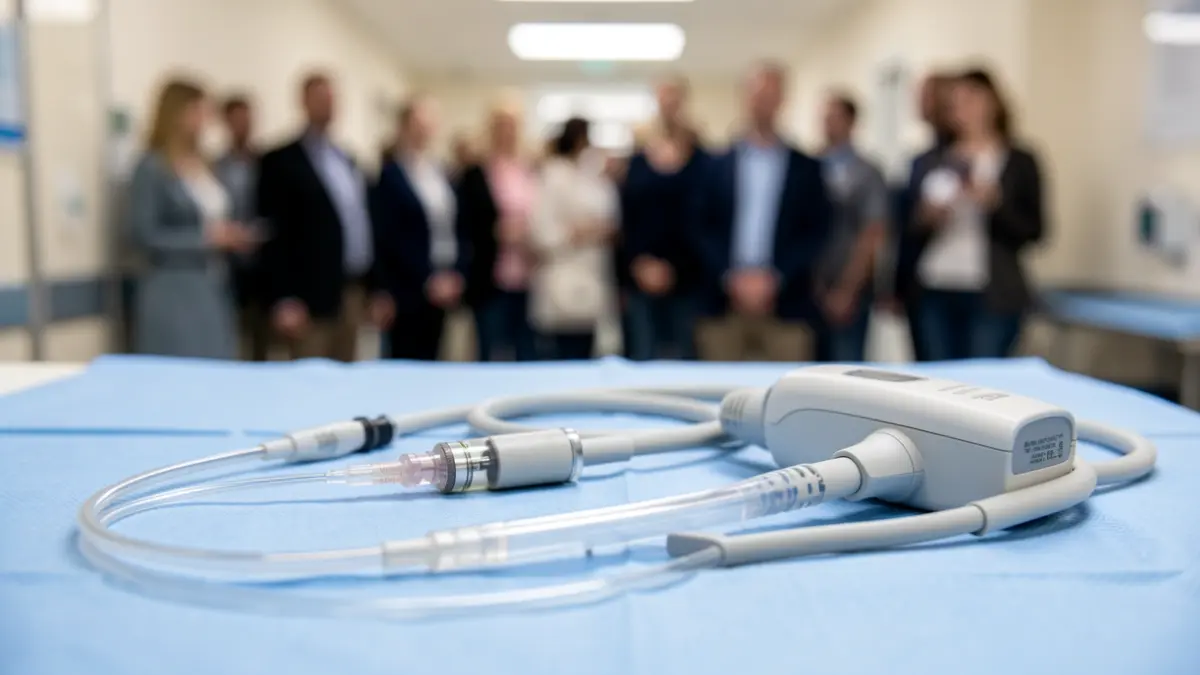
With over ten years of experience, the Pau Hospital Center's Vascular Access Unit (UAV), established in 2025, has benefited from additional human resources since 2026. This development allows for extended operating hours and an enriched range of services.
The UAV's missions include evaluating and advising on the most appropriate devices based on treatment needs, performing necessary interventions, providing specialized opinions to professionals on device use and monitoring, and sharing best practices.
The unit offers expertise in the placement of various intravenous devices, including ultrasound-guided peripheral venous catheters for difficult blood draws, Midlines, PICC-Lines (central venous catheters inserted via the arm), central venous catheters (tunneled or non-tunneled), and implantable ports (thoracic and brachial). Device removal is also part of their expertise. The team also provides services in pediatrics for the placement of these catheters.
Since 2024, brachial implantable ports have been offered as an alternative to thoracic ports, providing a comfortable and discreet option for certain prolonged intravenous treatments, with the choice of implantation site considering patient preferences.
Vascular access activity at the Pau Hospital is experiencing significant growth, with a projection of 630 procedures for the entire hospital in 2026. Indicative annual forecasts based on the first eight months of the year estimate approximately 555 PICC-Lines, 630 Midlines, 630 CCI, 135 PIV/assessments, and 60 pediatric procedures.
The UAV's multidisciplinary expertise is combined with interventional radiology and surgery. To support this growth, a dedicated interventional room for vascular access is planned for 2027.
The unit also integrates eco-responsible practices, prioritizing ultrasound guidance to minimize failed attempts, electronavigation to reduce X-ray exposure, local anesthesia for most procedures, reasoned use of consumables, and appropriate waste management.